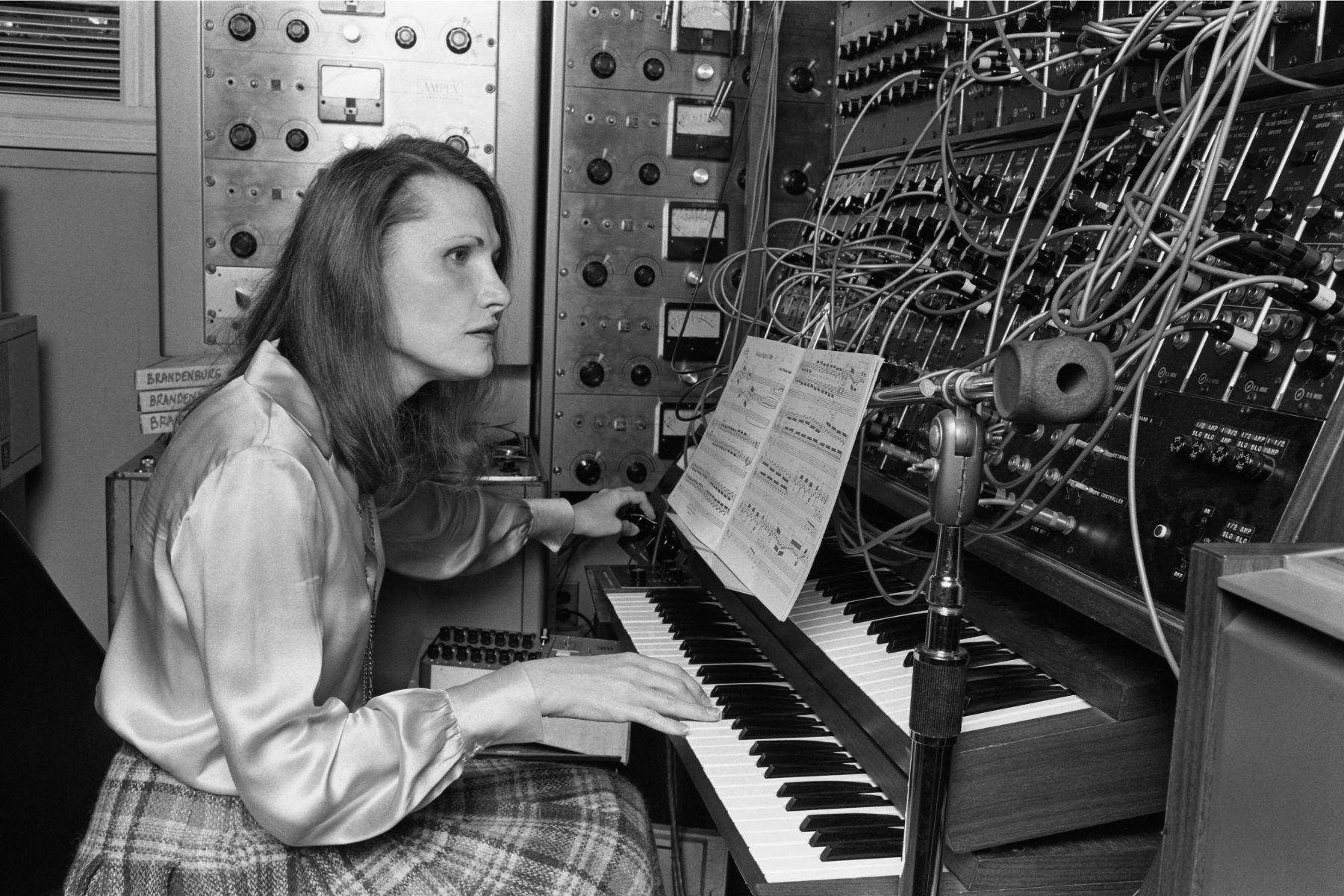
Music Technology History and Repertoire
This course surveys music technology and repertoire from the last century, as well as the experimental artistic practices that led to advancements in the technologies we use today. Throughout the course, we will examine the close relationship between technological developments, creative practice, collaborations amongst artists and creative technologists/engineers, and culture. We will utilize research methods that span musicology, ethnomusicology, artistic research, and critical studies to synthesize histories of music technology and engage in creative problem-solving. Through the consideration of primary and secondary source readings, as well as the careful analysis of musical works, we will utilize this rich history as a lens through which to further understand the current state of music technology and chart future directions for your research/creative practice.
Presenting a comprehensive view of music technology and practice in a single semester is insurmountable. Thus, we will not cover every technological development in the field of music technology. Instead, we will work towards leaving you with the tools, i.e., methods, resources, and application of resources, to further research your areas of interest during your studies. This class has historically focused primarily on advancements in the United States; I will do my best to include more international materials and encourage you all to bring them into the classroom.
Projects:
Project 1: Listening Guide
Create a listening guide for one of the pieces developed at the tape music centers we have studied throughout the unit. Listen to the piece of your choice and run it through at least 2 of the analysis/listening methods we discussed in class. Write a 750-1000 word response that addresses the following points below. Note: you should not use these points like a worksheet (e.g. you should write in paragraph form and approach this as a scholarly exercise. A good model for the rigor I am looking for is this https://120years.net/) Links to an external site.
1. Introduce the piece that you analyzed. Make sure to include a link to your piece (preferably youtube or apple music), when it was made, and the composer's date of birth (and death if applicable).
2. Discuss the composer(s), performer(s), and collaborators involved in making your piece of choice. Consider which tape/electronic music center the piece was made in, what was happening in the center/country/state where it was located, who was involved with making the piece, the composer's compositional style, and what technologies they had access to.
3. Describe the technologies and techniques used to make the piece.
4. Guided listening: Guide us through the listening process. Support your claims using tools presented in the Holmes, Huron, and/or McAdams. Note: you must choose at least two and explicitly refer to them and cite them.
Project 2:
Individually or in a group of two (both of you must submit the same assignment and clearly mark your names on it), create an annotated bibliography of historical sources that relate to a music technology research topic of your choice. For example, spatial audio, improvising systems, AI music, computational musicology, interactive music, etc.
Your will select 10 sources that cover at least 50 years of history. Separate them into categories: primary and secondary. Once you complete that step choose 5 sources that interest you the most and make an annotated bibliography your chosen sources. You should summarize each of the fives sources that you choose with at least 150-250 words double-spaced. For your 10 sources, you must have a minimum of 4 primary/secondary. In other words, you may have 5 primary sources and 5 secondary, 4 primary and 6 secondary, or 6 primary and 4 secondary.
Final Project: Simulation or Historically Situated Piece
As a group or individually, choose one piece, an instrument, concept, or figure that you are going to base your work off of for the final project. You may pick an artist that has not been covered in class. HOWEVER, the artist/instrument that you pick must have a substantial amount of peer reviewed, historical sources written about them. Part of this project is demonstrating historical research methods, please do not choose someone that only has web articles or reviews.
Make a creative response that engages with your chosen artist's work and material from the readings that we have been discussing in class and your literature review. The documentation of your piece, instrument, etc should be at least three-five minutes long. Your project will need to work and your artistic goal should be clear. You can use any digital, analog, or hybrid platform you wish to realize your project: Max, Live, Pure Data, Arduino, C++, Swift, Web Audio API, MATLAB, etc.
Accompany your creative response with a paper that is at least 1000 words long (double spaced). Even though it is short, it should be written in a 'conference style', and be done with the rigor of a submission to SEAMUS, ICMC, or NIME (without the need for an evaluation). Your paper must included at least 10 historical sources (recordings count and five of them should be from your literature review). You may choose the format that you with to write in, keep citation style consistent.
You do not need to have an abstract; however, you do need to include (they do not necessarily have to be in this order). I encourage you to experiment with creative writing styles(!):